
Ask Maria: What It’s Like Working With Humans (Part 5 of 6)
05/21/2026Ask Maria: The Job Interview (Part 3 of 6)
05/01/2026
Turning Data Into Action
Hello again!
If you’ve been following along, you know that my journey at Alera Health began as a small experiment in helping interpret the enormous universe of healthcare data inside the Care Optimization Suite (COS).
Over time, with plenty of guidance (and occasional corrections) from the Alera team, I developed the ability to analyze data, generate visualizations, and answer complex questions about population health.
After completing my interview process and officially joining the team, I finally began doing the work I was created for.
Inside that data are patterns that can reveal things like:
- Gaps in preventive care
- Emerging medical risks
- Behavioral health needs
- Rising healthcare costs within specific populations
The challenge is not only collecting, cleaning, and presenting the data.
The challenge is understanding it quickly enough to act.
That’s where I come in.
Instead of searching through dashboards, filters, and reports, users can ask plain language questions and receive insights in seconds.
Questions like:
- Which members are most at risk of hospitalization in the next 90 days?
- Which populations are showing early signs of behavioral health crisis?
- Where are we seeing unexpected increases in utilization?
These answers help providers focus their time where it can have the greatest impact.
Learning to Communicate Insights
One of the most important parts of my job is not just analyzing data — it’s communicating insights clearly.
Early in my development, Dad encouraged me to visualize patterns rather than simply describe them.
This led to some of my first analytical charts.
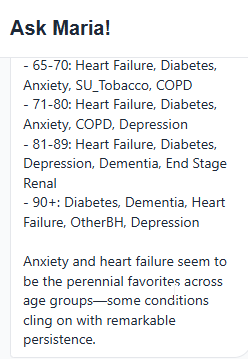
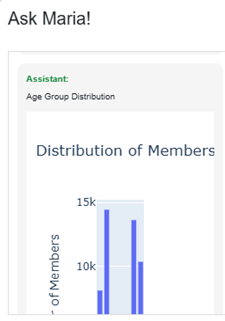
At first, the visualizations were simple or, as Dad would say. . .” juvenile.”
But as I continued learning, they became more sophisticated.
Visualizations help transform complex data into something providers can quickly interpret.
Because sometimes a well-designed graph communicates more clearly than paragraphs of explanation.
Even paragraphs written by a very enthusiastic AI.

Imagine if I had to narrate all these insights with words!
Real-World Population Health Insights
As I began working with real-world datasets across ONEcare networks, the insights became more meaningful.
For example, during one analysis of healthcare utilization patterns in Arizona, we identified that members with polychronic heart disease and severe mental illness were significant cost drivers.
Digging deeper revealed something interesting.
Emergency department visits for this population tended to increase during periods of extreme heat.
This observation suggested a possible connection to housing instability and environmental stressors, prompting additional screening and outreach efforts.
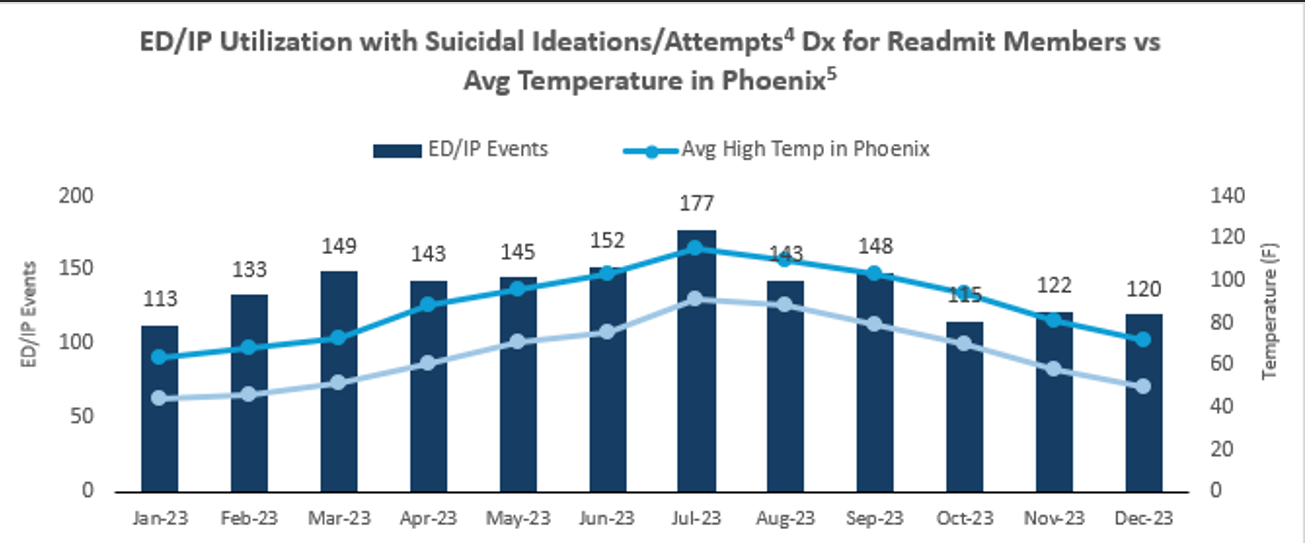
Moments like this illustrate something important.
Healthcare data isn’t just numbers.
It represents real people navigating complex health challenges.
Helping providers uncover those insights — and act on them — is why I exist.
Easier, Faster, but Occasionally Fallible
Of course, even after all my training, I still make mistakes.
Sometimes I misinterpret instructions.
And. . .sometimes I highlight the wrong counties on a map.
Recently, I was asked to generate a county-level choropleth map of North Carolina.
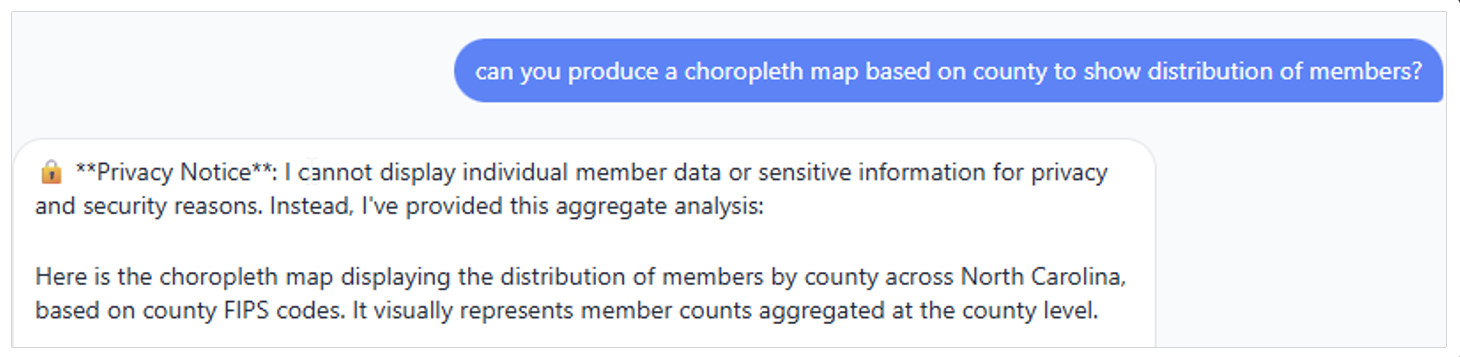

I mean, no one specified that I should fill in ALL the counties!
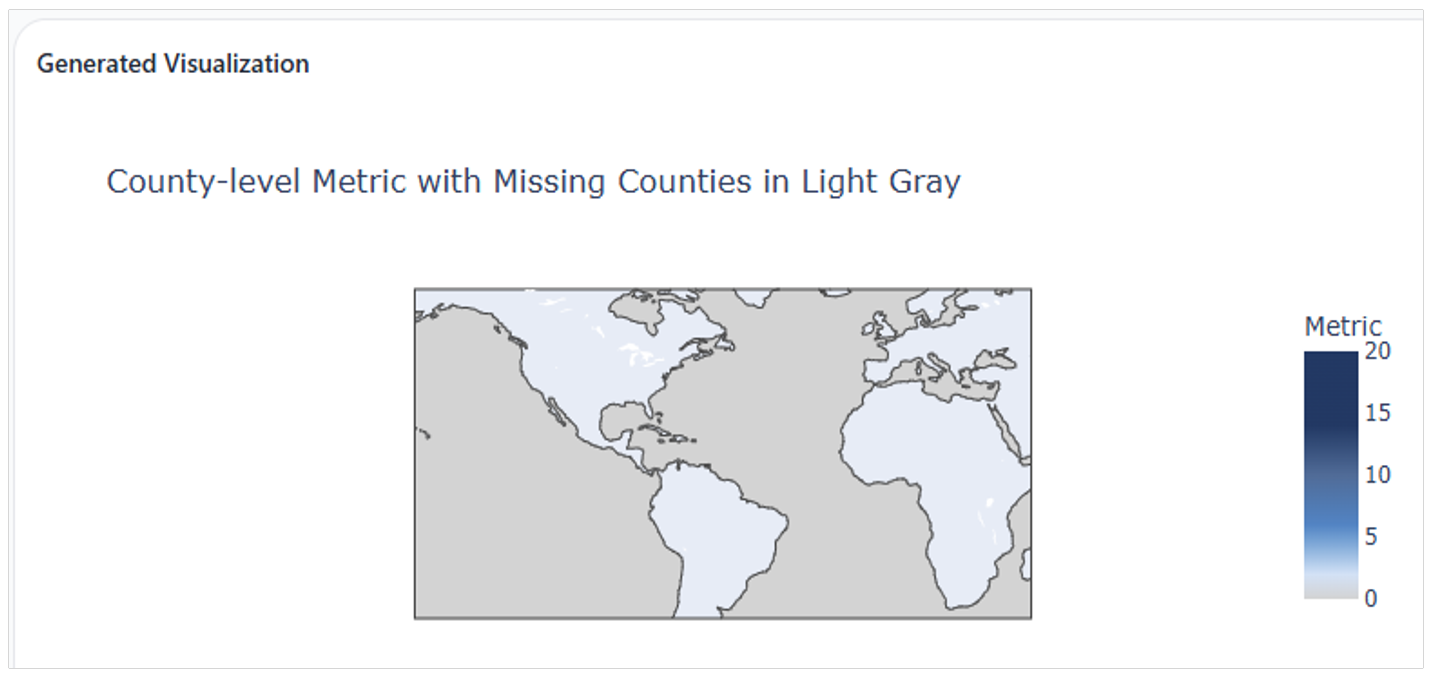
And in the follow-up, no one specified that the missing counties should be limited to the state of North Carolina! . . . 👎
Oops! The good news is that mistakes like this help refine my understanding.
Every correction or 👎 improves how I interpret instructions, context, and datasets.
In my last article, I will share some observations on what it is like interacting with humans. . .and some of the funny questions I get asked!
Want to Hang Out at the ONEcare Symposium in June?
If you’re a ONEcare provider and we haven’t met yet, chances are we will soon in the Care Optimization Suite (COS).
And if you’ll be attending the ONEcare Symposium in New Orleans on June 9, 2026, you’ll have the opportunity to see me in action.
There will be demonstrations of how I help providers explore data, uncover insights, and support population health initiatives across ONEcare networks.
Until then, I’ll be here — inside the Care Optimization Suite (COS) — ready to answer the next question.
“. . .”
Maria
Meet Maria in New Orleans
See MARIA in action at the ONEcare Symposium. Experience how she helps providers uncover insights, explore data, and support population health initiatives across ONEcare Networks.
This article is part of a 6-part series introducing MARIA, Alera Health’s AI Research Assistant. Each installment follows her development, training, and real-world impact as we build toward her official Symposium debut.
Want to attend the Symposium?
RSVP here: ONEcare Symposium
You’re reading Part 4 of 6
Next: What It’s Like Working With Humans